Unique Social Work Electives
Check out these unique and timely Social Work electives for the Spring 2027 semester and more! As always, make sure you talk to your advisor and check out the UW Guide for the full list of social work course offerings.
Soc Work 375-001/Legal Studies 400 (SEM 051)
Thursdays, 2:30-3:45 pm
3 credits
Requisites: Sophomore standing
Overview:
This upcoming spring semester offers a new seminar-based course: Criminal Justice, Families, and Social Work. This course is led by Dr. Pajarita Charles, and Associate Professor in the Sandra Rosenbaum School of Social Work.
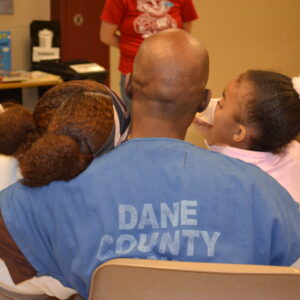
What actually happens to a family when a parent enters the criminal justice system? How do local programs and policies shape families’ lives? And where do we go from here? Criminal Justice, Families, and Social Work is a course that helps students build knowledge about criminal (in)justice, families, and change strategies to address the harm caused by justice-system involvement. Taught by Dr. Pajarita Charles, this course moves beyond traditional textbooks to look directly at the impact of incarceration on families, the structural elements that drive mass incarceration, and policy solutions that can shift the focus from punishment to rehabilitation, family well-being, and community health.
Why is a course on families, criminal justice, and social work important?
Incarceration in the United States is a family affair. Almost half of all Americans, and nearly two-thirds of Black Americans, have had an immediate family member go to prison or jail for at least one night. Incarceration and its aftermath shapes family relationships, children’s well-being, and the stability of whole communities. Social workers encounter these realities in many practice settings, yet students may have limited opportunities to study these issues and identify policy and program solutions centered around family well-being, social justice, and social work.
Who might be interested in this course?
This course will interest students in social work, legal studies, criminal justice, human development and family studies, psychology, public policy, health policy, sociology, global health, and social justice and education. It is a good fit for students interested in systemic inequality and the structural causes of racial and ethnic disparities from incarceration.
Whether you’re planning for a career in social work, law, criminal justice, policy, health, community advocacy, or in other disciplines, this course provides tools and insights about the criminal legal system through the lens of family, social work, and social justice.
What can students expect?
Students can expect an active learning environment that encourages questions and dialogue. Highlights of the course include a field component to visit a local prison, jail, or juvenile detention center (schedule permitting) and guest speakers who are professionals in the field and individuals with lived experience of incarceration. Students will examine how criminal justice system involvement affects families, assess existing policies and programs, and propose a policy or practice solution that advances justice and family well-being with attention to race and ethnicity.
In what way is the School of Social Work positioned to offer a course like this?Social work’s focus on individuals, families, and communities, and its commitment to human dignity, equity, and social justice, offers a strong foundation for studying the intersection of family and the criminal justice system. The School of Social Work can offer this learning opportunity to students so they can connect the consequences of incarceration to evidence-informed practice and policy, learn from people and organizations directly engaged with these issues, and propose effective strategies for change in the future.
Soc Work 617
Tuesdays, 3:30-5:25 pm
3 credits
Requisites: (SOC WORK 205 or HDFS 174) and junior standing, or graduate/professional standing
Description: An overview of risk and protective factors, theories, services, research, and policies related to social work with infants, toddlers, very young children and their families. Models of prevention and intervention to support social/emotional wellbeing in young children will be discussed.
Why was this new course developed? Why is it important?
This course was developed to offer advanced undergraduate and graduate students the opportunity to take a class with a specialized focus on infant and early childhood mental health and learn how to respond to the unique needs of young children and their parents/caregivers during pregnancy and through early childhood. Infant and early childhood mental health is an interdisciplinary field with roots in social work, dedicated to advancing understanding of early development, early relationships, and the conditions that support young children and those who care for them to thrive. This is important because experiences and relationships in the earliest years of life build the foundation for lifelong health and wellbeing.
Who might be interested in this course?
Advanced undergraduate and graduate students studying social work, human development and family studies, education, psychology, occupational therapy, nursing, and more might be interested in this course. The course is well suited for students interested in career paths in mental health, child welfare, early childhood education, prenatal and postpartum support, community-based family support programs, policy and advocacy roles focused on making sure that children and families have the support they need to thrive.
What can students expect?
In this class, students will learn how to promote relational health and support the wellbeing of young children and their parents/caregivers. Students will develop specialized knowledge and skills related to pregnancy and early parenthood, infant and young child development and behavior, family relationships and dynamics, and strategies to support early relationships and strengthen families exposed to adversity including separation, trauma, and loss.
In what way is the School of Social Work positioned to offer a course like this?The field of infant and early childhood mental health has its roots in social work. The School of Social Work is well positioned to offer this course and introduce UW–Madison students to an interdisciplinary field of study and practice that encompasses pregnancy to age six and includes promotion, prevention, intervention, treatment and consultation services for young children and families as well as research, policy, advocacy and systems change.
Soc Work 675-001
Tuesdays, 1:20-3:15 pm
2 credits
Requisites: Junior standing
Short description of course:
This interdisciplinary course offers a comprehensive introduction to psychedelic compounds commonly utilized in psychedelic-assisted care (PAC), alongside the history, theory, and evolving research landscape of the field. Attention is given to the social, ethical, cultural, and policy dimensions shaping contemporary psychedelic practice.
Why is this course important or a nice addition to the school?
SW 675 is available to undergraduate and graduate students from a variety of fields. It provides a comprehensive overview of various psychedelic compounds and their clinical uses for specific populations, including people with substance use disorders, trauma, treatment-resistant depression, as well as Veterans and people at the end of life. This course gives a broad introduction to the field of psychedelic-assisted care, as well as the research occurring on this campus.
In contrast, our clinically-focused elective SW 838: Principles of Psychedelic Healing, which we will be offering again in summer 2027, is for graduate students and practicing clinical social workers and focuses on preparing current and future clinicians for informed and ethical care in psychedelic harm reduction and integration.
Who might be interested in this course?
Psychedelic-assisted care is poised to become a major sector in mental health care, spanning the fields of psychology, pharmacy, nursing, social work, psychiatry, neuroscience, public health, history, and more. SW 675 will be of interest to undergrad and graduate students who enjoy multidisciplinary thinking and who want to build a foundational understanding of an emerging frontier in healthcare.
What can students expect?
Students can expect an active learning environment in which scholarly articles as well as popular media stimulate in-class discussions and group activities, allowing them to engage with complex questions of ethics, science, and equitable access. They will get to hear from leading scholars and researchers from the UW–Madison Center for Psychedelic Research and Education.
In what way is the School of Social Work positioned to offer a course like this?
Social workers are the largest and most diverse group of mental health providers in the country. In addition to direct clinical practice, social workers are present in public policy, community organizing, and healthcare administration. Our core professional principles, which focus on social justice, equity, and person-centered approaches, naturally align with the holistic, systems and justice-oriented nature of psychedelic medicine.